Why a Restart Can Change the Shape of a Match
Why a restart can change the shape of a match: learn how restart rules assign the ball, set player positions, and reveal the choices available next.
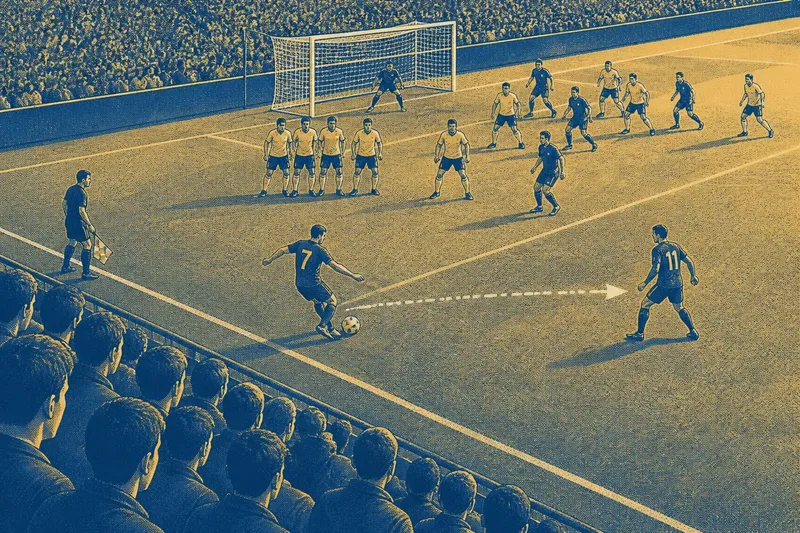
A soccer free kick near the sideline makes defenders arrange themselves around a patch of grass while attackers decide whether to crowd the goal or keep a player back. A restart can change the shape of a match because the rules decide where play resumes, who acts first, and what each side may do before the ball is live.
The procedure differs across sports. A basketball throw-in, a rugby lineout, and a baseball pitch each put play back in motion in a different way, so the useful question is what the stoppage has fixed and what remains for players to choose.
What does a restart rule set?
A restart assigns a point or method for resuming play after a stoppage. Depending on the sport, it may specify who has possession, where the ball returns, how opponents must position themselves, and what action makes the ball live.
In soccer, the location of a free kick affects the angle available to the kicker and the required distance between the ball and defenders. In basketball, a throw-in restores possession at a boundary; the inbounder’s position and the time allowed to release the ball constrain the next action.
A rugby lineout gathers players around the touchline for a contestable throw. In baseball, the pitcher resumes play with the batter, runners, and fielders arranged according to the situation. “Restart” is a broad category, not a single procedure—and it does not necessarily give the restarting side an uncontested opportunity.
How does the rule shape the opening choice?
The first legal action can lead directly to an attempt, require a pass, or set up a contest for possession. A soccer free kick may allow a direct shot; a basketball inbound instead starts with a throw to a teammate.
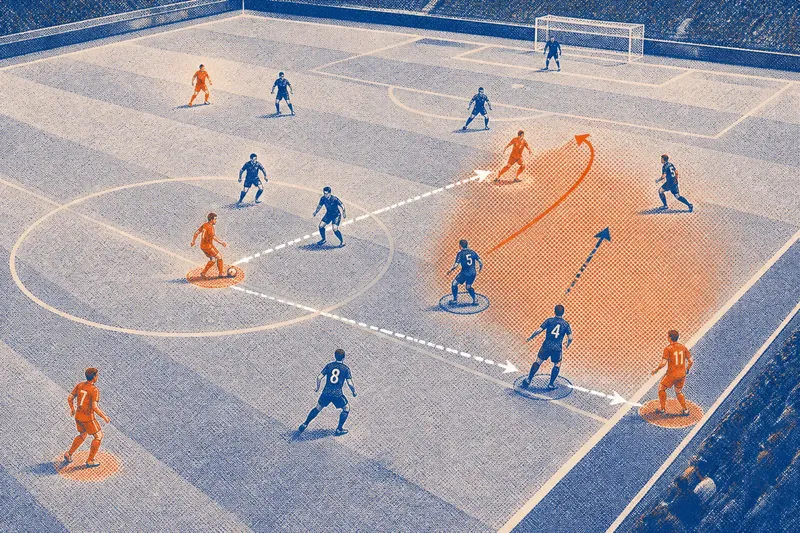
Position restrictions matter too. A defensive wall at a soccer free kick blocks one route while leaving others to defend. On a basketball sideline inbound, defenders may deny the nearest receiver, so the attacking team can use a second player as a passing option.
Some procedures put a premium on speed; others give players a chance to organize before the ball returns. A team may choose a quick, simple action rather than wait for a more elaborate arrangement, if the rules and circumstances permit. The rule defines the available opening moves, not the outcome.
What should you check before play resumes?
Use the official’s signal and the players’ arrangement to identify the restriction that matters. Each check below points to a decision, rather than asking you to memorize a rulebook.
- Check the restart location. If it is near a scoring area or boundary, expect the available routes to be limited by that geometry; if it is farther away, look for a pass or a formation that preserves possession.
- Check which team has the restart. If the official indicates one side, follow its first choice; if the signal is unclear, wait for the players to take their positions before deciding who has possession.
- Check the required positions. If opponents hold a marked distance or players gather in a designated formation, use that arrangement to identify the restriction; if no special formation is visible, focus on the method of putting the ball back in play.
- Check what makes the ball live. If a kick, throw, or other action is required, watch for that action before judging movement; if play is already live under the sport’s rule, follow the next legal touch instead.
- Check the first intended receiver or target. If defenders converge on the obvious option, look for a second route; if the target is covered, see whether the restarting side chooses a safer pass or contests possession.
- Check the official’s response to a faulty restart. If play is stopped for an incorrect procedure, use the signal to tell whether the restart is repeated or awarded to the other side; if the ruling is not clear, follow the officials’ next placement and possession signal.
What questions help make sense of a restart?
Can a restart lead directly to a scoring attempt?
Some rules allow the restarting player to send the ball directly toward a scoring target; others require a teammate to touch it first or impose another condition. That distinction affects whether defenders protect the target or prepare for a pass.
Why does the same stoppage look different across sports?
Each sport specifies its own way to resume play, such as a kick, throw, pitch, or contest. The local rule sets who acts first and where opponents may stand, so the shared label does not make the procedures interchangeable.
Can a team use a restart to slow the match?
Depending on the rules and situation, a team may take time to organize or choose a controlled option. It may instead restart quickly to act before opponents are set; speed and delay are choices, not fixed features of a stoppage.
What happens if a restart is taken incorrectly?
The official applies the relevant sport’s procedure, which may require a retake, a change of possession, or another ruling. The exact response depends on the rule and circumstances, so the official’s signal is more useful than assuming every error has the same consequence.
How can one restart redirect the next phase?
A restart’s location can draw players toward danger or give them room to spread out. The procedure also determines who can act first, which can make a team defend a different route than it expected before the stoppage.
Imagine a soccer team awarded a free kick near the touchline. For this invented situation, assume the attackers initially send the ball toward teammates near goal and the defense gathers to block that delivery; after the route closes, the kicker passes back to a teammate with room to send the ball from a new angle. The observable result is that the defenders who crowded the first route must turn and adjust to the changed direction.
To understand why a restart can change the shape of a match, identify the rule that controls the return to play, then note which option the players actually use. That keeps attention on the restart’s specific effect—the possession, positions, and permitted first action—rather than treating every whistle as the same kind of pause.