The Bench: How Substitutes Became Part of Match-Day Strategy
Learn how substitutes moved from emergency cover to match-day strategy, and how the rules and a coach’s available options shape a change.

A player stands beside the touchline, jacket off, waiting for the referee’s signal. In soccer, that entrance may be injury cover, but it can also be a planned response to the score, an opponent, or a role that needs changing. The history of substitutes is not one straight march from emergency reserve to tactical instrument; it is a series of rule changes that differed by sport and competition.
What did early replacement rules allow?
There was no single starting point for substitutes across team sports. In association football, early international and domestic rules generally treated replacements as exceptional, and some competitions initially allowed none. The first permitted replacements were tied to particular circumstances, such as an injured player or a goalkeeper, rather than open-ended coaching choice.
Those limits made the reserve’s purpose relatively narrow: be ready if a player could not continue under the applicable rules. A coach might still change instructions from the sideline, but could not necessarily change the personnel on the field. That description fits particular rule settings, not every sport or competition in every era.
Other sports developed different arrangements. Rugby codes and American football, for instance, have their own substitution traditions and rules; their systems cannot be treated as a chapter of soccer history. The shared point is simply that the meaning of a reserve depends on the rules governing entry and re-entry.
How did soccer substitutions become tactical?
In soccer, the shift came through staged changes rather than a single decisive moment. Competition rules began allowing substitutions in defined circumstances, then expanded the permitted reasons and opportunities over time. The details and dates varied among organizers, so a league’s history cannot stand in for every tournament’s.
As rules allowed coaches greater discretion over whom to replace and when, a substitute could be selected for a tactical purpose rather than only to cover an unavailable player. A fresh wide player might threaten space behind a tiring defense; a midfielder comfortable under pressure might help retain possession; a defender might be brought on to reinforce a lead. Each option still depends on the competition’s current rules and the players available.
Modern soccer competitions also differ in their substitution limits, whether unused opportunities carry over, and how extra time is handled. Other sports may permit more frequent or rolling changes. Before comparing a coach’s choices across competitions, check the applicable rulebook: the bench is only as flexible as the rules allow.
Why replace a player who looks fine?
Visible distress is not the only reason for a change. A coach may want a different skill set, a new matchup, or a player better suited to the next phase. From the stands, the cause may be impossible to distinguish: tactical preference, workload, and physical concern can overlap.
One substitution can also alter several jobs at once. An incoming attacker may take a forward position while a teammate shifts wide; a defensive replacement may allow another player to move into midfield. The outgoing player’s role, not just the name on the substitution board, helps explain the decision.
What can the bench tell you before a change?
The list of available players shows the coach’s options, not a script. A bench with a specialist winger, a versatile midfielder, and a center back makes different responses possible, but the match determines which one is useful. Warming up is a clue, not a promise.
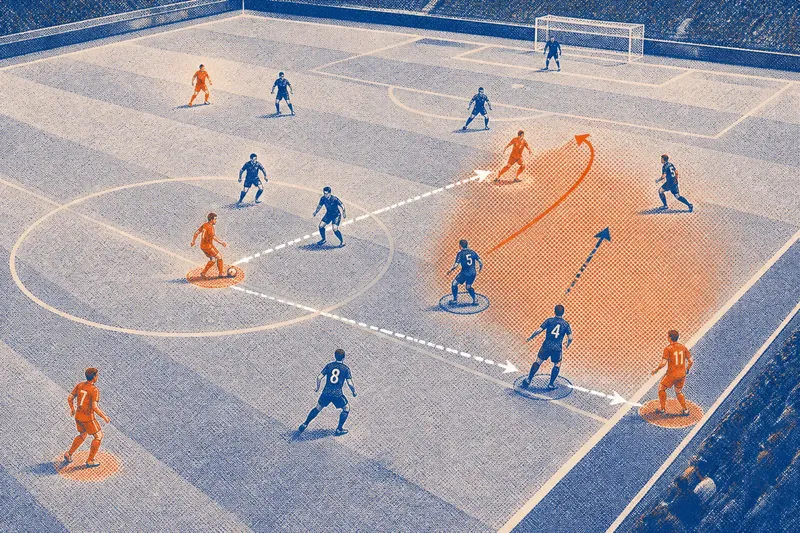
Say a fictional soccer team is protecting a narrow lead, and its wide midfielders have spent much of the match following opposing fullbacks. The coach sends on a fresh winger and asks that player to stay higher. The likely observable result is that the opposing fullbacks hesitate to advance as freely, easing some pressure on the team’s defense; the tradeoff is that the new winger may contribute less to tracking back.
Versatility can matter when the bench lacks a specialist for the role a coach wants to change. A player who can cover two positions may permit a tactical adjustment without moving several teammates. The tradeoff is that a flexible player may not offer the same focused skill as a specialist.
What should you watch when a substitute enters?
Keep a short record of the change rather than trying to guess the coach’s entire plan. Note the outgoing and incoming roles, then check what the team does next. These observations help separate a visible adjustment from assumptions about motive.
- Check the incoming player’s role. If the player takes the outgoing player’s position, then treat it as a direct replacement; if not, look for a teammate who has shifted roles.
- Check the team’s starting positions after the restart. If the team presses higher, then the change may be aimed at applying pressure; if it stays deep, consider whether the substitution was primarily about defending space.
- Check who receives the ball in the next attacking spell. If play repeatedly goes toward the new player, then the team may be trying to use that player’s particular strength; if not, the role may be less central than it first appeared.
- Check the opponent’s response. If an opposing player changes position or marks the substitute closely, then the change has prompted a counter-adjustment; if nothing obvious changes, avoid assuming the opponent has been unsettled.
- Check who now covers the outgoing player’s old responsibilities. If a teammate takes them on, then watch for the resulting tradeoff elsewhere; if nobody appears to, the team may have accepted a gap or changed its shape.
- Check the competition’s substitution procedure when relevant. If the rules allow another change or a re-entry, then the coach retains that option; if they do not, interpret the decision as a more limited use of the available bench.
These checks are more useful than assuming a late change must be defensive or that adding a forward means an all-out attack. The score, remaining options, and competition rules all matter. A substitution offers evidence about a plan, but rarely enough to identify every reason behind it.
Why does the bench matter if nobody enters?
Reserves shape preparation even when they remain unused. Coaches can plan for different match situations based on the skills available, and starting players know their assignments may change if a teammate enters. The bench can therefore influence the opening approach as well as later decisions.
Being a reserve also requires attention without the continuous rhythm of playing. A player must follow the match, understand the instructions, and be ready to act if called. That is less glamorous than scoring, though it does involve fewer opportunities to blame the grass.
The history of soccer substitutions explains why a player warming up may represent more than injury cover: rule changes made deliberate intervention possible. For a useful read of match-day strategy, track the role the coach is changing, the teammate who inherits its duties, and the rule that defines what the bench can still offer.