A First Match on the Radio: Listening for the Shape of Play
Follow a first match on the radio by recognizing orientation, changes in pace, and recurring commentary terms, so missed details do not derail the story.
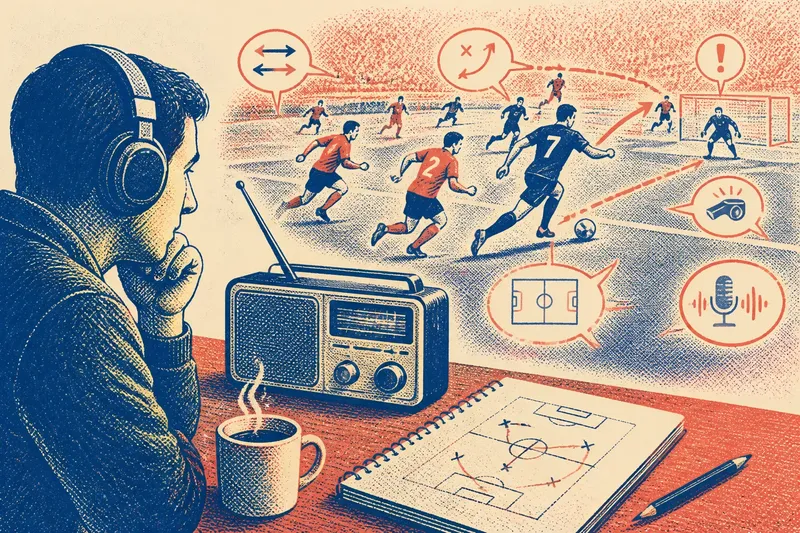
The kettle clicks off as a radio commentator says the home side has settled into the right half of the field. A first match on the radio can sound like a stream of names with no picture attached. Listen for the broadcast’s map, the changes in its pace, and the phrases that explain why play has stopped or moved on.
A radio account is not a complete description of every pass. It is a running selection of details, and commentators differ in how much they explain. The aim is not to reconstruct each touch, but to understand the sequence well enough to know what changed.
Where does the broadcast place the action?
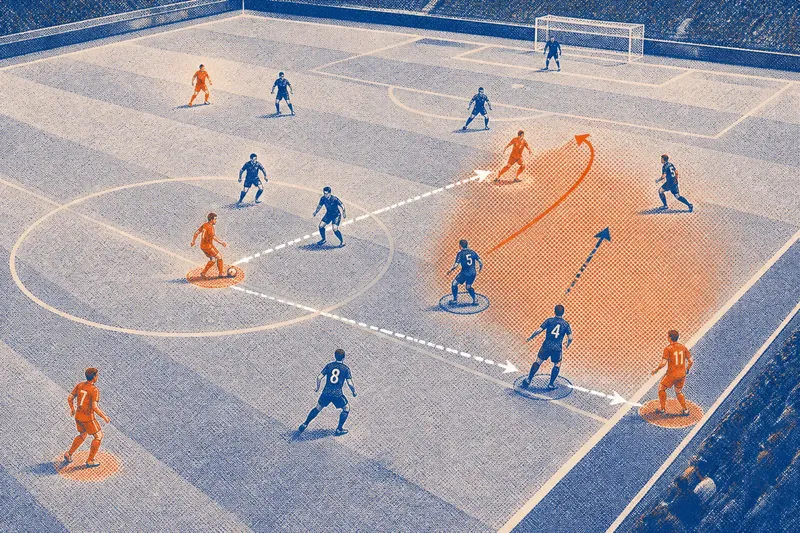
Listen for location words: the center circle, touchline, penalty area, goal line, or near and far sides. The sport determines its own vocabulary, but these references tell you whether play is central, wide, deep in one team’s end, or approaching a scoring area.
Establish which way each team is attacking before trying to remember individual players. A commentator may say that a side is moving from left to right or attacking the goal near the far end. If the teams switch ends, listen for the new orientation rather than carrying the old one forward by habit.
Player names work as occasional landmarks, not as a roll call to memorize. A name paired with a position or role—defender, winger, striker, goalkeeper—can help place that player in the action. If a name passes too quickly to catch, keep the team and location instead.
Some broadcasts explain the field regularly; others rely on shorthand. The program listing can identify the sport, teams, and competition, while the opening minutes usually establish the main voices and direction of attack. If the signal is poor, a stable station or official league audio stream is more useful than repeatedly tuning between fragments.
What does a change in commentary pace tell you?
A measured run of names and locations often accompanies controlled possession or a pause. Shorter phrases, quicker delivery, or a sharp change in volume may signal a counterattack, a contested ball, or a chance developing near the scoring area.
Excitement is a cue, not a verdict. A loud call may accompany an ordinary move, while a quiet voice may describe a dangerous opening. Listen for the event behind the delivery: did the ball move forward, did an opponent intercept it, or did the attack turn back?
Pauses and quieter stretches can also mark a stoppage, a reset, or a wait for an official decision. When the account resumes, note the stated restart and location. Those details distinguish a brief interruption from a change in possession or phase.
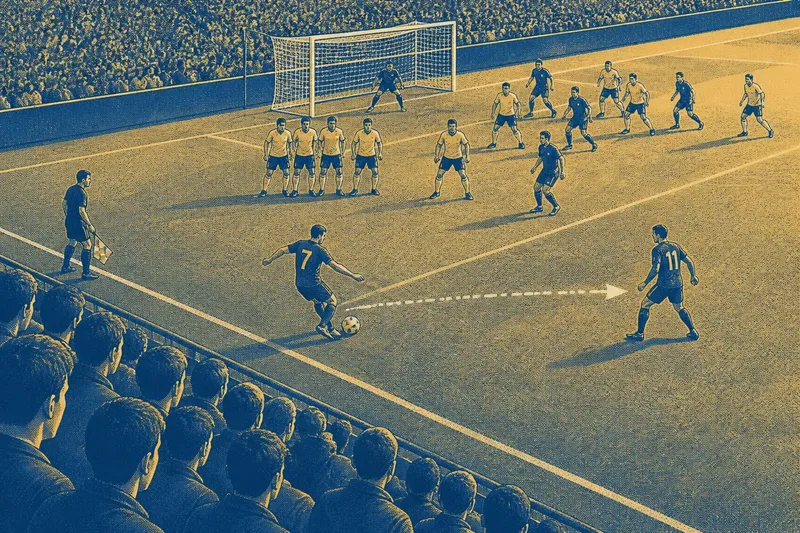
Say you tune in during an invented match while the visiting side has the ball near midfield. The commentator describes short passes, then speeds up as a player carries the ball down the right side; a defender forces play toward the sideline, and the delivery slows as the commentator identifies a throw-in. The resulting sequence is clear without every touch: build-up, advance, pressure, and a stoppage.
Which recurring words explain what happened?
Terms such as possession, turnover, tackle, clearance, cross, shot, save, foul, and restart often identify an event before the commentator fills in its details. Their exact meanings depend on the sport, so listen for what happened next as well as for the word itself. A turnover may send the other side forward; a clearance can remove immediate danger without ending an attack.
Some terms describe location or intention. “Wide” may refer to an attack’s path or a shot outside the scoring area. “Pressing” usually means defenders are trying to hurry the player with the ball; “switching play” means moving the ball to another area of the field. Often, the next sentence supplies enough context to make an unfamiliar term intelligible.
Officials’ calls can sound like a second layer of commentary. A whistle, signal, or mention of a flag may mean play has stopped, but not necessarily explain why. Wait for the stated ruling and restart; an appeal or early guess is not the same as an official decision.
A small mental glossary is enough to start. Recognizing a few terms—possession, pressure, transition, foul, and restart—helps explain the shape of an event without requiring a study session before kickoff.
How does a radio match unfold from opening whistle to result?
Imagine a hypothetical match between the Northbridge Rovers and Harbor Town. You join at the opening whistle with no view of the field. The commentator says Northbridge is attacking toward the far goal while Harbor defends in a compact line. You now know who is trying to advance and who is trying to limit space near its goal.
Northbridge circulates the ball across its own half. The commentary is calm as the commentator names two defenders and describes a pass toward the sideline. Harbor moves up to pressure the receiver, who sends the ball backward. Northbridge still has possession; the attack has changed direction, not ownership.
Later, Harbor intercepts a pass and moves quickly into the other half. The commentary picks up as the speaker describes a break, a runner, and a defender retreating. Harbor shoots; the goalkeeper saves, and the ball goes out. The sequence is now specific: possession changed, an attack advanced, a shot was taken, and a save prevented a score.
After the restart, Northbridge presses higher and wins the ball. A cross reaches the scoring area, but a defender clears it. Urgent delivery does not make this a goal: the attack was stopped before the ball reached the target.
Near the end, Harbor slows its attack with passes across midfield, then Northbridge recovers possession. The commentator gives the score and describes the final whistle. The result is the score stated on air; the events leading to it form a sequence of possession, movement, pressure, and outcome.
When a broadcast leaves a gap, return to the next clear location, team, or stated event. Missing one pass does not require guessing what happened; the next restart or score update often gives you a firm place to resume listening.
Which radio match questions help untangle a confusing moment?
What does “in possession” mean?
It identifies the team controlling the ball, though control can be brief or contested. Pair the phrase with the stated location to tell whether that team is building an attack, defending near its own goal, or keeping the ball away from pressure.
Why does the commentator keep naming the same player?
The player may be involved in repeated actions, occupy a useful position, or take a role in a restart. Repeated names can help you recognize who is involved, but they do not mean that the entire match revolves around that player.
How can I tell whether a chance was actually scored?
Wait for the commentator to say that a goal or score has been awarded, then listen for the score update and restart. A shot, near miss, save, or crowd reaction alone does not confirm a score.
What should I do if I miss part of the commentary?
Resume at the next explicit description of possession, location, or restart. Use a score update if one is given, then follow the next sequence instead of trying to reconstruct every missed touch.
What helps keep a radio broadcast clear?
Use a radio with a stable signal, wired headphones, or an official audio stream at a comfortable volume. Avoid switching commentators during active play unless the current feed stops working: their orientation and terminology may differ, which adds needless confusion.
At a stoppage or halftime, check the score and note any names or terms you want to recognize. During active play, listen for the commentator’s stated event and its consequence. A notebook is optional; the match is not a vocabulary exam.
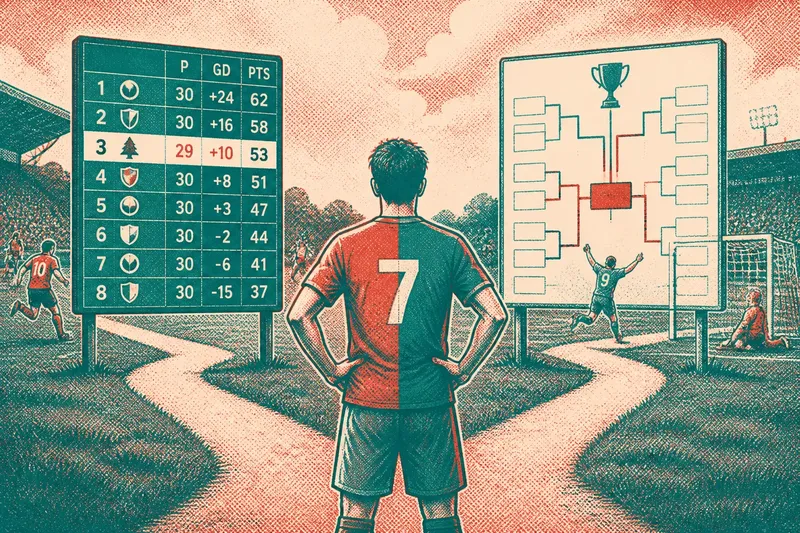
For a first match on the radio, concentrate on the team and place named in the latest clear call, then listen for the next explicit change—a turnover, stoppage, shot, or score. That gives you a reliable point to rejoin without turning every missed detail into a mystery.